

The Latin Quarter is where Paris began. Long before the Eiffel Tower, before the Louvre, before Haussmann's grand boulevards, there was this hill on the left bank of the Seine, where Roman soldiers built a city called Lutetia and where students have debated ideas in narrow streets for nearly a thousand years.
Today the Latin Quarter (5th arrondissement) is one of the most historically dense neighborhoods in the world. Every street corner hides a story. Every building has a past. And it's all waiting to be explored, at your own pace, on your own terms.
Why It's Called the Latin Quarter
The name has nothing to do with Latin America. It comes from the fact that Latin was the language of instruction at the University of Paris, founded here in the 12th century and scholars from across Europe filled these streets speaking the common academic language of the medieval world.
The university tradition continues today: the Sorbonne, one of the world's oldest universities, still dominates the neighborhood. Its grand courtyard, visible through the gates on Rue des Écoles, is one of those quietly magnificent Paris sights that most tourists walk straight past.
Roman Paris: The Ruins Beneath Your Feet
Most people don't realize that Paris was a Roman city for over 400 years. The Latin Quarter sits on the site of ancient Lutetia, and if you know where to look, the evidence is everywhere.
The Arènes de Lutèce, a 1st-century Roman amphitheatre hidden behind an apartment block on Rue Monge, is one of the most remarkable hidden sites in Paris. It once held 15,000 spectators for gladiatorial games. Today it's a public park where locals play pétanque on the same ground where gladiators once fought. Entry is free, and it's almost never crowded.
The Cluny Thermal Baths, part of the Musée de Cluny complex, are the best-preserved Roman ruins in Paris. The frigidarium (cold bath room) still stands to its original height, an extraordinary survival from the 3rd century AD.
Rue Saint-Jacques follows the exact path of the Roman road that once ran from Lutetia to Rome. When you walk it today, you're walking a road that has been in continuous use for over 2,000 years.
The Panthéon: France's Temple of Great Men (and Women)
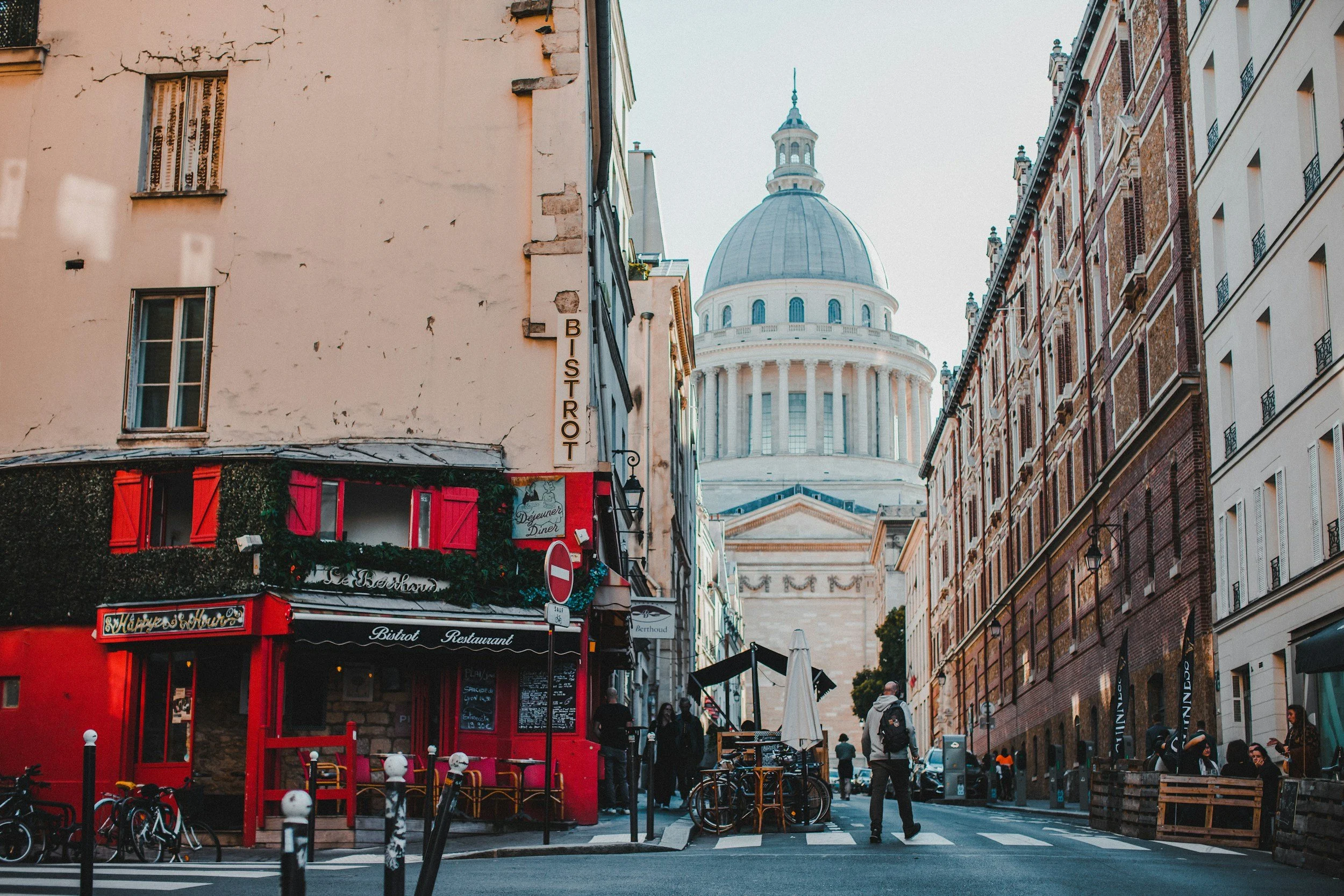
The Panthéon is the Latin Quarter's most visible landmark, a neoclassical masterpiece modeled on the Pantheon in Rome, built in the 18th century as a church and converted into a mausoleum for France's greatest citizens after the Revolution.
Voltaire and Rousseau are buried here, their tombs placed facing each other across the crypt, an intentional tribute to their intellectual rivalry. Marie Curie was the first woman to be interred here (in 1995), joining the likes of Victor Hugo, Émile Zola, and Alexandre Dumas.
The building itself is worth visiting for the Foucault Pendulum suspended from its dome, a working demonstration of the Earth's rotation, installed in 1851 and still swinging today.
Don't miss Lycée Henri-IV, right next door, one of France's most prestigious schools, built on the grounds of a medieval abbey. Its tower, the Tour Clovis, is the last surviving remnant of a monastery founded in the 6th century.
Shakespeare and Company: The Most Famous Bookshop in the World
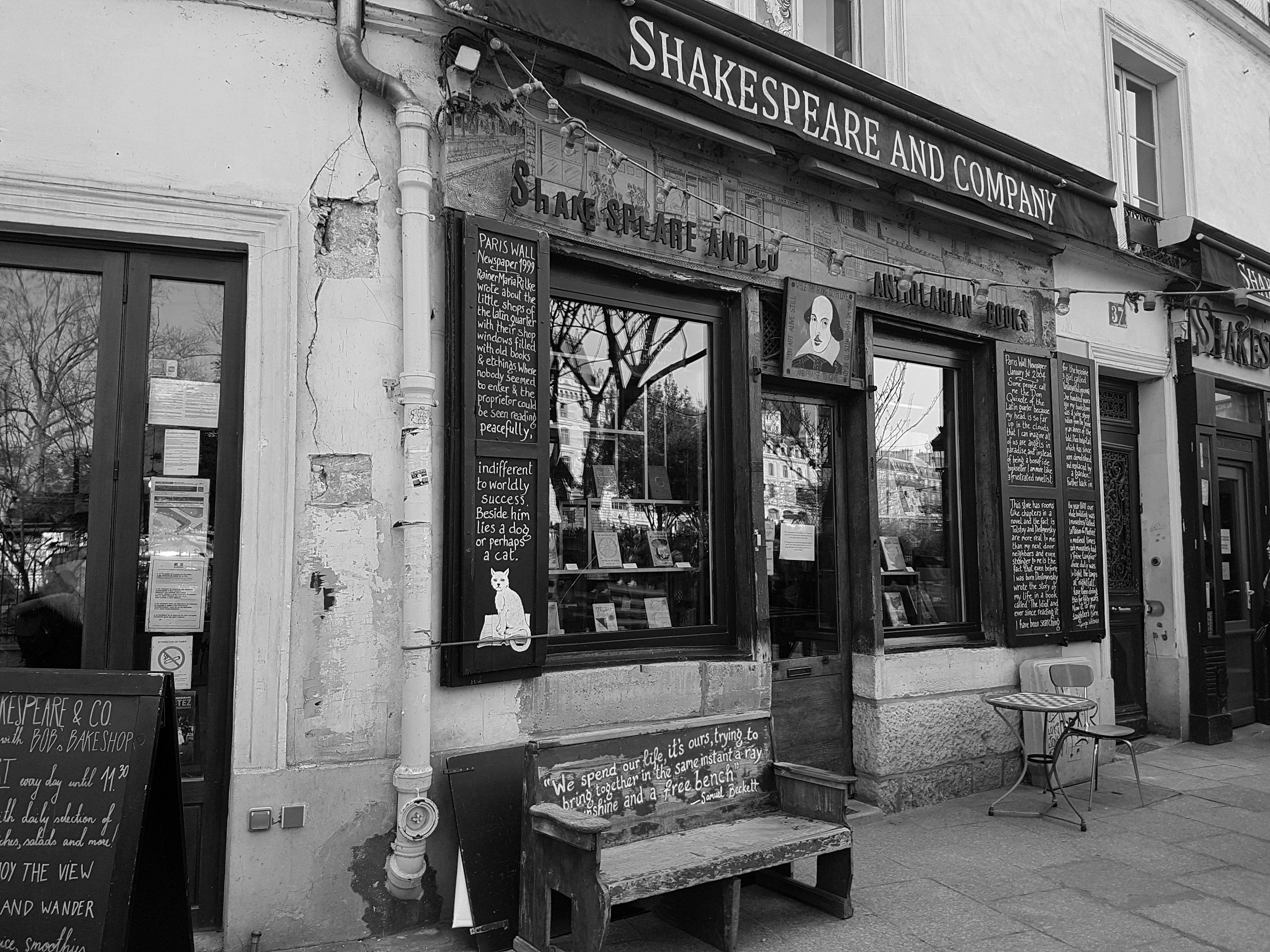
On the banks of the Seine, with a direct view of Notre-Dame, sits Shakespeare and Company, arguably the most famous English-language bookshop in the world. Founded in 1951 by George Whitman, it became a gathering place for Beat Generation writers and continues to attract literary pilgrims from every country.
The shop is a labyrinth of shelves, nooks, and reading alcoves. It still operates the "Tumbleweeds" programme, allowing aspiring writers to sleep among the books in exchange for working a few hours a day. Pick up a book, get a cup of tea from the café next door, and spend an hour here, it's one of those Paris experiences that feels genuinely irreplaceable.
The Streets Worth Getting Lost In
The real magic of the Latin Quarter isn't in the monuments, it's in the streets between them.
Rue de la Huchette is the oldest continuously inhabited street in Paris, dating back to the 13th century. Despite its tourist-heavy ground floor (Greek restaurants, crêpe stands), the buildings above street level are medieval survivors of extraordinary age.
Rue du Chat-qui-Pêche, literally "Street of the Fishing Cat", is believed to be the narrowest street in Paris at just 1.8 metres wide. It dates from the 15th century and somehow survived every wave of urban renovation.
Rue Mouffetard is a street market that has operated continuously since the Middle Ages. Come on a Saturday morning for the full experience, cheese, bread, vegetables, and the particular pleasure of buying breakfast from a vendor whose family has probably been selling food on this street for generations.
Practical Tips for Your Self-Guided Latin Quarter Walk
Best time to visit: Morning on weekdays; the streets are quieter and the light is beautiful
How long: Allow 3 to 4 hours minimum; a full day if you want to go deep
Getting there: Metro line 10, Cluny-La Sorbonne station, or RER B, Luxembourg station
Don't miss: Arènes de Lutèce (free), Rue du Chat-qui-Pêche, Rue Mouffetard market
Eat: Head to Place de la Contrescarpe for a classic Parisian café lunch
Go Deeper With a Self-Guided Ebook
Our Latin Quarter ebook takes you through 2,000 years of history street by street, with rich historical storytelling, precise maps, and the kind of detail that transforms a pleasant walk into an unforgettable experience.
