

15 Hidden Gems in Paris Most Tourists Never Find
Paris is one of the most visited cities in the world. Which means that if you follow the tourist trail, Eiffel Tower, Louvre, Notre-Dame, Champs-Élysées, you will share every moment with millions of other people doing exactly the same thing.
But Paris is also a city of extraordinary secrets. Hidden courtyards tucked behind heavy wooden doors. Roman ruins buried beneath apartment blocks. Vineyard in the middle of the 18th arrondissement. Alleys so narrow you can touch both walls.
These are the places that most tourists never find. The places that make you feel like Paris belongs to you.
Here are 15 of them.
1. Les Arènes de Lutèce - A Roman Amphitheatre Hidden in the 5th
Where: Rue Monge, 5th arrondissement How to get there: Metro line 7, Place Monge
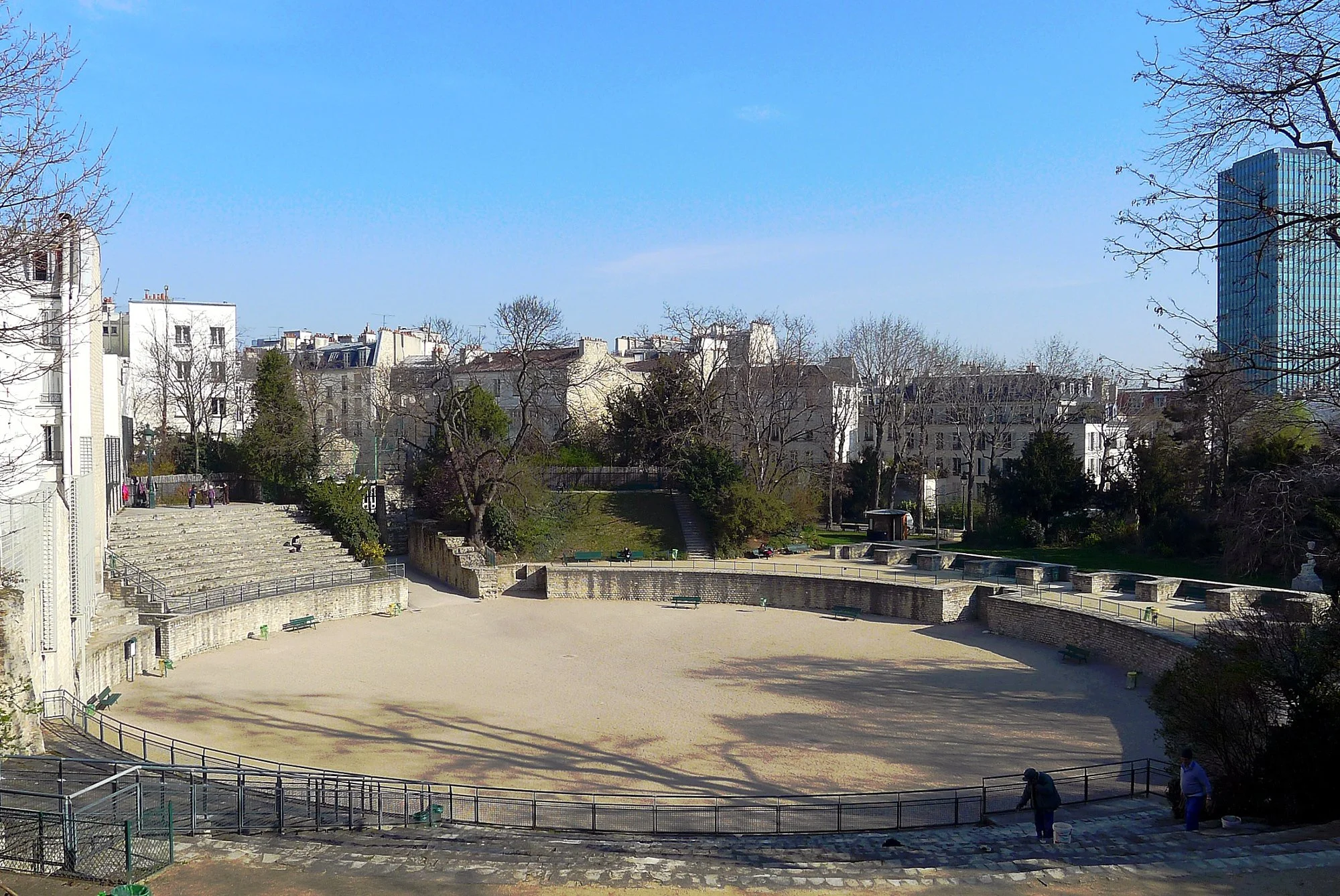
Behind an ordinary apartment block on Rue Monge lies a 1st-century Roman amphitheatre that once held 15,000 spectators watching gladiatorial combat.
Today it's a public park. Locals play pétanque on the same arena floor where gladiators once fought. Entry is free. There are almost never any tourists.
The Arènes de Lutèce survived because it was used as a fortress, a rubbish dump, and a public garden before anyone thought to protect it. Victor Hugo campaigned to save it in the 19th century. It's now one of the most remarkable and most ignored, historical sites in Paris.
2. La Maison Rose - The Most Photographed House Nobody Knows
Where: Rue de l'Abreuvoir, 18th arrondissement How to get there: Metro line 12, Abbesses
This tiny pink house covered in greenery on a quiet corner of Montmartre is one of the most photographed subjects in Paris and most people who photograph it have no idea what it is.
La Maison Rose dates from the early 20th century and was once a favorite haunt of the artists who lived in the neighborhood, including Picasso and Utrillo, who painted it several times.
Visit on a weekday morning. The light is perfect and you'll often have it almost entirely to yourself.
3. Passage de l'Ancre - A Medieval Alleyway in the Marais
Where: 223 Rue Saint-Martin, 3rd arrondissement How to get there: Metro line 11, Arts et Métiers
Passage de l'Ancre is easy to miss, a narrow opening in the wall of Rue Saint-Martin that leads into one of the most atmospheric alleyways in Paris.
The passage dates from the 15th century and feels utterly unchanged. Old crafts workshops, an umbrella repair shop that has operated here since the 19th century, and the particular quiet of a place that exists slightly outside of time.
4. La Vigne de Montmartre - A Working Vineyard in Paris
Where: Rue des Saules, 18th arrondissement How to get there: Metro line 12, Lamarck-Caulaincourt
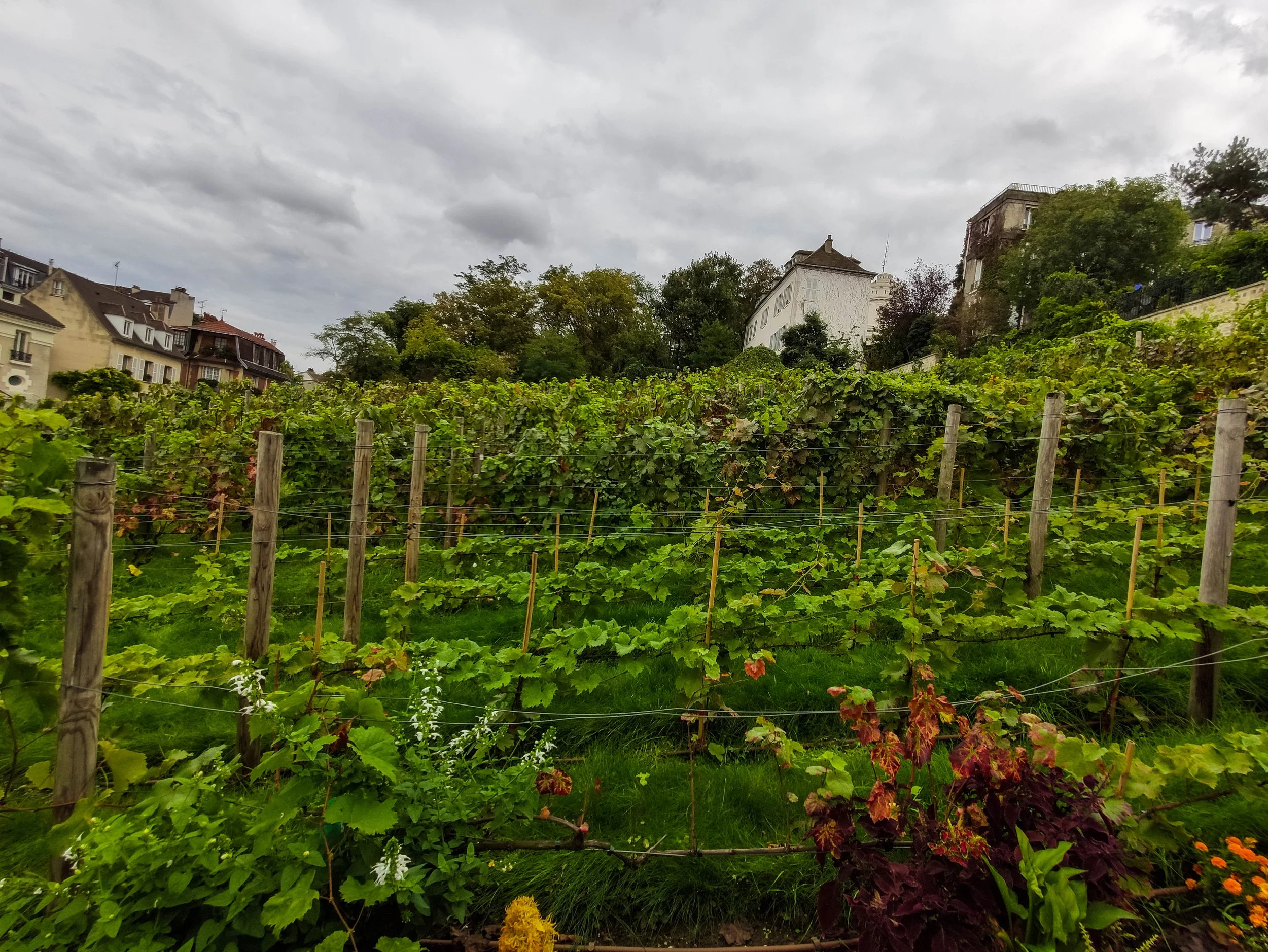
Yes, there is a working vineyard in the middle of Paris.
The Vineyard of Montmartre was planted in 1933 on a hillside overlooking the city. It produces around 800 bottles of Pinot Noir per year, sold at charity auction every October at the Festival des Vendanges.
Walk past in September and you can see the grapes ripening on the vines. The sight of a vineyard against the Parisian skyline is genuinely surreal.
5. Rue du Chat-qui-Pêche - The Narrowest Street in Paris
Where: Near Rue de la Huchette, 5th arrondissement How to get there: Metro line 4, Saint-Michel
Rue du Chat-qui-Pêche, "Street of the Fishing Cat", is just 1.8 metres wide and dates from the 15th century. You can stand in the middle and touch both walls simultaneously.
The name comes from a legend about a black cat seen fishing in the Seine at the end of the alley. The cat was suspected of being a sorcerer in disguise. This is medieval Paris in miniature: atmospheric, irrational, and wonderful.
6. The Secret Passage of the Hôtel de Sully
Where: 62 Rue Saint-Antoine, 4th arrondissement How to get there: Metro line 1, Saint-Paul
The Hôtel de Sully is a magnificent 17th-century mansion, but its real secret is what's at the back.
Push through the courtyard and keep walking. A passage at the rear of the building leads directly through to Place des Vosges, Paris's most beautiful square. It's a hidden connection between two of the Marais's greatest spaces that most visitors never discover.
7. Le Bateau-Lavoir - Where Picasso Changed Art Forever
Where: Place Émile-Goudeau, 18th arrondissement How to get there: Metro line 12, Abbesses
In 1907, in a ramshackle wooden studio on this square in Montmartre, Pablo Picasso painted Les Demoiselles d'Avignon, widely considered one of the most important works in the history of Western art and the painting that launched Cubism.
The original building, nicknamed "Le Bateau-Lavoir" (the laundry boat) by poet Max Jacob, burned down in 1970. The reconstruction still houses working artists today. A plaque marks the entrance.
Stand on the square and think about what was created here. It's one of those places where art history becomes something you can actually touch.
8. Place du Calvaire - Montmartre's Secret Viewpoint
Where: Near Place du Tertre, 18th arrondissement How to get there: Metro line 12, Abbesses
Everyone knows the view from the steps of the Sacré-Cœur. Almost nobody knows Place du Calvaire, a tiny square just two minutes' walk away that offers an equally extraordinary panorama and almost no crowds.
A small, quiet square with a view across the rooftops of Paris. Come at sunset and you'll understand why artists have been trying to paint this city for 200 years.
9. The Crypt of the Panthéon - Voltaire vs. Rousseau
Where: Place du Panthéon, 5th arrondissement How to get there: RER B, Luxembourg
Everyone knows the Panthéon. Far fewer people know that Voltaire and Rousseau, two philosophers who famously despised each other in life, are buried in the same crypt, their tombs placed directly facing each other.
The person who arranged this is believed to have done so deliberately. Their eternal confrontation is one of the great dark jokes of French history.
Marie Curie is also here, the first woman interred in the Panthéon. As is Victor Hugo, whose funeral procession in 1885 drew an estimated two million people onto the streets of Paris.
10. Rue Mouffetard - A Market Since the Middle Ages
Where: 5th arrondissement How to get there: Metro line 7, Censier-Daubenton
Rue Mouffetard is one of the oldest streets in Paris, and its market has operated continuously since the Middle Ages. Come on a Saturday morning for the full experience.
Cheese vendors, fruit stalls, fishmongers, bread bakers. The smells and sounds of a Parisian market that has barely changed in 500 years. Find a table at one of the café terraces on Place de la Contrescarpe at the top of the street, order a coffee, and watch the market life unfold around you.
11. The Thermal Baths of Cluny - Roman Ruins in the Heart of Paris
Where: 6 Place Paul-Painlevé, 5th arrondissement How to get there: Metro line 10, Cluny-La Sorbonne
The Musée de Cluny sits on the site of a 3rd-century Roman bathhouse and part of that bathhouse still stands inside the museum complex. The frigidarium (cold bath room) survives to its full original height: an extraordinary feat of survival given that 1,800 years of Parisian history have happened around it.
The museum itself houses the famous "Lady and the Unicorn" tapestry series, considered one of the greatest works of medieval art in existence.
12. Van Gogh's House - 54 Rue Lepic
Where: 54 Rue Lepic, 18th arrondissement How to get there: Metro line 12, Abbesses or Blanche
Vincent van Gogh lived at 54 Rue Lepic with his brother Theo from 1886 to 1888. During those two years in Paris, he produced over 200 paintings, more than in any other period of his life, including some of his most important early works.
The building still stands, almost unchanged. A small plaque marks the entrance. You can walk up Rue Lepic, look at the window of the apartment where he lived, and try to imagine him working in the light that still filters through the same streets.
13. Shakespeare and Company - The World's Most Famous Bookshop
Where: 37 Rue de la Bûcherie, 5th arrondissement How to get there: Metro line 4, Saint-Michel
This legendary English-language bookshop, founded by George Whitman in 1951, has been a pilgrimage site for writers and readers ever since. Allen Ginsberg, William Burroughs, and Henry Miller all spent time here. Today it still hosts readings, sells carefully curated books, and maintains its "Tumbleweeds" program, allowing writers to sleep among the books in exchange for a few hours of work per day.
The view of Notre-Dame from the bookshop's doorway may be the finest sight in Paris. Grab a coffee from the café next door and stand there for a while.
14. The Hidden Courtyards of the Marais
Where: Throughout the 3rd and 4th arrondissements How to get there: Metro line 1, Saint-Paul
The Marais is full of hidden courtyards, hôtels particuliers, tucked behind heavy wooden doors. Most tourists walk straight past them.
The secret is simple: push any large wooden door that's slightly ajar. More often than not, it opens onto a courtyard that hasn't changed since the 17th century. Some of the best are on Rue des Archives, Rue de Bretagne, and Rue Vieille du Temple.
This is Paris doing what Paris does best: hiding its treasures in plain sight.
15. Rue de la Huchette - The Oldest Inhabited Street in Paris
Where: Near Saint-Michel, 5th arrondissement How to get there: Metro line 4, Saint-Michel
Rue de la Huchette has been continuously inhabited since the 13th century, making it one of the oldest lived-in streets in Paris. The buildings above the tourist-heavy ground floor (Greek restaurants, crêpe stands, souvenir shops) are medieval survivors of extraordinary age.
Look up rather than straight ahead. The upper floors of these buildings have watched 800 years of Parisian history pass beneath them. The Hôtel du Vieux-Paris at number 9 dates from the 16th century. The jazz club at number 5, the Caveau de la Huchette, has been running since 1946.
Discover These Hidden Gems With a Paris Backstages Ebook
Every location in this article is included in one of our self-guided walking tour ebooks, with precise locations, maps, historical context, and the stories behind every hidden corner.
No guide, no group, no fixed schedule. Just you and the real Paris.
