

If there's one neighborhood in Paris that rewards slow, curious exploration more than any other, it's Le Marais. Wedged between the City Hall and the Bastille in the 3rd and 4th arrondissements, it's a place where medieval streets run alongside contemporary art galleries, where a 17th-century royal palace sits next to a thriving LGBTQ+ scene, and where Jewish delis have operated for over a century on the same block as trendy concept stores.
Le Marais is Paris in miniature, complicated, beautiful, and endlessly surprising.
A Neighborhood That Survived Haussmann
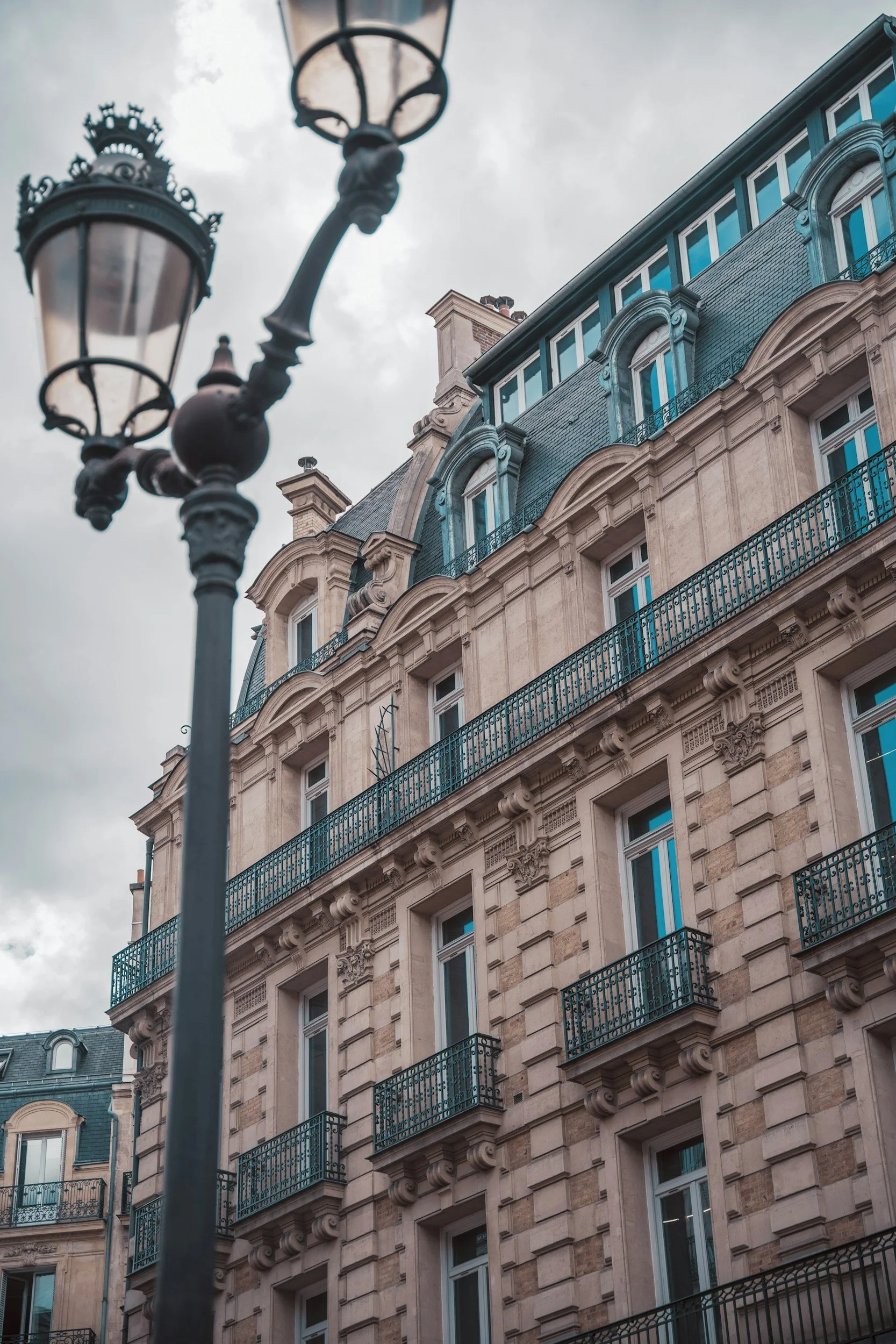
One of the reasons Le Marais feels so different from the rest of Paris is that it largely escaped the massive urban renovation led by Baron Haussmann in the 19th century. While he tore down thousands of medieval buildings across the city to create the wide boulevards and uniform facades we associate with Paris today, Le Marais was left largely untouched.
The result is a neighborhood that still feels genuinely old, with narrow, winding streets, irregular building heights, and hidden courtyards tucked behind heavy wooden doors. If you want to understand what Paris looked like before Haussmann got his hands on it, Le Marais is your best chance.
Place des Vosges: The Most Beautiful Square in Paris
Built between 1605 and 1612 under King Henri IV, Place des Vosges is widely considered the oldest planned square in Paris and many would argue the most beautiful. Its perfectly symmetrical arcades, red brick facades, and central garden create an atmosphere of quiet elegance that feels almost surreal in the middle of a busy city.
Victor Hugo lived here for 16 years, at number 6, his apartment is now a free museum. On sunny days, the square fills with locals reading, children playing, and street musicians performing under the arches. It's the kind of place where you sit down for five minutes and end up staying for an hour.
The Jewish Quarter: Rue des Rosiers
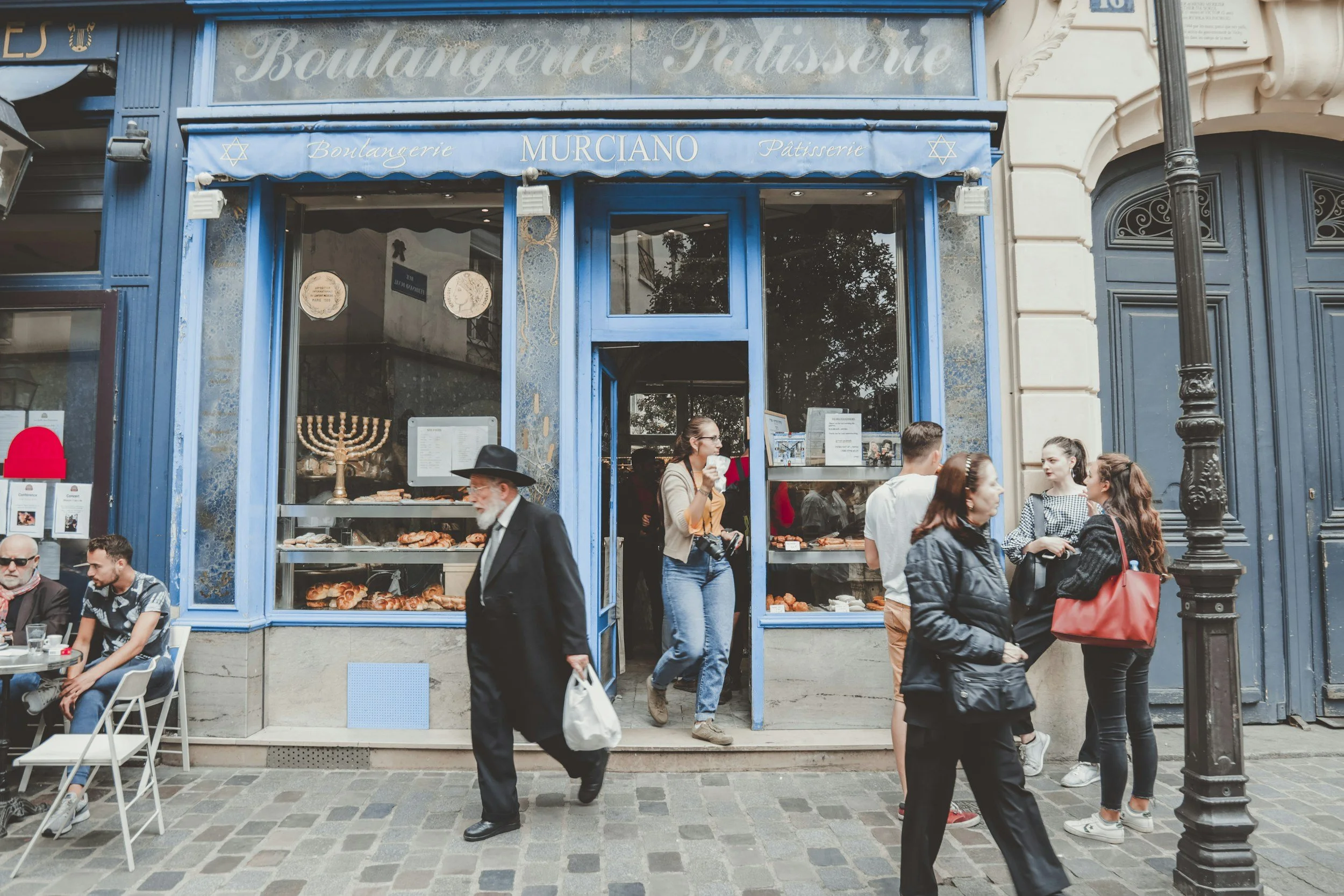
The area around Rue des Rosiers has been the heart of Paris's Jewish community since the 13th century. Today it's one of the most atmospheric streets in the city, a mix of traditional synagogues, kosher bakeries, falafel stands, and Yiddish bookshops.
The famous falafel war between L'As du Fallafel and Chez Marianne has been raging for decades. Both are excellent. Both will have a queue on weekends. Both are worth it.
Walk a few blocks deeper into the quarter and the crowds thin out. The streets around Rue des Écouffes and Rue Ferdinand Duval feel remarkably unchanged, a quiet pocket of history in the middle of one of Paris's busiest tourist areas.
Hidden Courtyards & Secret Passages
Le Marais is full of hidden courtyards, called hôtels particuliers, tucked behind unassuming doors. Most visitors walk right past them. Here are a few worth pushing open:
Hôtel de Sully on Rue Saint-Antoine has one of the most beautiful courtyards in Paris. It was built in 1624 and connects through to Place des Vosges via a hidden passage, a perfect shortcut that most tourists never discover.
Hôtel de Guénégaud on Rue des Archives dates from the 1650s and is one of the best-preserved private mansions in the Marais. It now houses the Museum of Hunting and Nature, one of Paris's most underrated museums.
Passage de l'Ancre near the Arts et Métiers metro is a tiny, easily missed alleyway that feels like it belongs in a different century entirely.
Contemporary Art Meets Medieval Streets
Le Marais is also the undisputed center of Paris's contemporary art scene. The area around Rue Vieille du Temple and Rue Debelleyme is lined with private galleries, most of them free to enter. On weekend afternoons, gallery openings spill out onto the street, turning the whole neighborhood into an impromptu open-air art event.
The Centre Pompidou on the western edge of the Marais is the obvious anchor, but don't overlook the smaller institutions like the Maison Européenne de la Photographie or the Mémorial de la Shoah, both of which are among the most moving museum experiences in Paris.
Practical Tips for Your Self-Guided Marais Walk
Best time to visit: Weekday mornings for the Jewish Quarter; Sunday afternoons for the galleries
How long: Allow 4 to 5 hours for a thorough exploration
Getting there: Metro lines 1 or 11, Saint-Paul or Arts et Métiers stations
Note: Many Jewish-owned shops close on Saturday (Shabbat) and reopen Sunday
Eat: Grab a falafel on Rue des Rosiers, then coffee at any of the dozens of independent cafés
Go Deeper With a Self-Guided Ebook
Our Le Marais ebook guides you through every layer of this extraordinary neighborhood, from its royal origins to its modern-day creative energy, with detailed maps, historical storytelling, and directions to spots most visitors never find.
